
SIM Database Portal | SIM Information Guide Online
SIM Database portal designed to provide useful information about SIM services, verification processes, and mobile connectivity resources with a smooth experience.
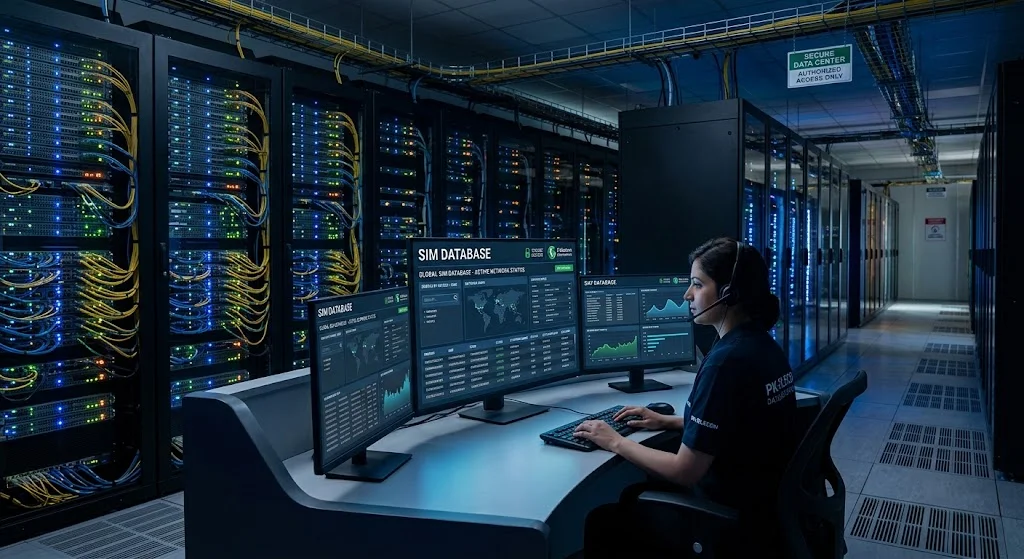
SIM Database – What Pakistan’s Real Subscriber Database Is (And Isn’t)
Last updated: 28 July 2026 | Reviewed against PTA’s public statements, Pakistan’s Personal Data Protection Act 2025, and documented breach-reporting from Pakistani and international cybersecurity sources.
“SIM Database” is one of the most heavily searched — and most misunderstood — phrases in Pakistani telecom queries. A large share of people typing it are hoping to find a website where they can enter any phone number and pull up the owner’s name, address, or call history. We’re going to be direct about this immediately: no such legal database exists for public access, and understanding exactly why requires understanding what Pakistan’s real SIM database actually is, who is legally allowed to query it, and the documented history of what happens when unauthorized copies of subscriber data end up circulating anyway.
This page is published as part of SIM Owner Details, where our focus is Pakistani telecom-verification literacy grounded in PTA’s actual regulatory framework, not in the marketing claims of unofficial “database” sites.
What “SIM Database” Actually Refers To
Every SIM activated in Pakistan is recorded in a centralized subscriber verification system jointly maintained through cooperation between licensed telecom operators, PTA (the regulator), and NADRA (the identity authority behind the biometric match). This is the real “SIM database” — an internal, access-controlled regulatory system, not a public product. It exists to do exactly three things:
- Confirm, at the point of sale, that a new SIM is being registered against a live, valid CNIC through a real-time biometric fingerprint match.
- Give each individual subscriber a way to check their own record — this is precisely what the 668 SMS check, the 667 MNP check, and the cnic.sims.pk portal do, all covered in full on our Live Tracker page.
- Allow regulatory and lawful oversight — PTA for sector-wide compliance monitoring, and law enforcement strictly through a formal, court-authorized process, not an open query tool.
Nowhere in that architecture is there a fourth function: an open lookup where anyone can search anyone else’s number. That capability has never existed as a legitimate PTA or operator product, and PTA has stated directly that it does not itself hold or manage subscriber information — that responsibility sits with the licensed operators under regulatory oversight, not with PTA as a central public-facing database operator.
Why No Public “SIM Database” Lookup Tool Exists Legally
This isn’t a gap or an oversight — it’s a deliberate legal boundary. Subscriber data in Pakistan is protected under the Prevention of Electronic Crimes Act (PECA) 2016, and more recently under the dedicated Personal Data Protection Act (PDPA) 2025, both of which treat an individual’s telecom and identity data as protected information that cannot be disclosed to third parties without lawful authority. A “SIM database” website that lets a stranger search your number, your CNIC, your call records, or your location is not a product operating within a regulatory grey area — it is, definitionally, operating in violation of this framework, regardless of how professionally it’s marketed or how confidently it presents its results.
A Documented History of Reported SIM and Telecom Data Incidents in Pakistan
Because so much confusion around “SIM database” searches stems from real, reported incidents, it’s worth covering the documented history plainly rather than ignoring it:
- September 2025 — Reports of subscriber data for sale online. Media reports alleged that mobile location data, call and data records, and foreign travel details tied to Pakistani SIM holders — including a federal minister — were being offered for sale, with location queries reportedly priced around Rs. 500 and call records around Rs. 2,000. PTA responded publicly, stating that its own audit found no breaches within the licensed telecom sector, and that the reported datasets appeared to combine family details, travel records, vehicle registrations, and CNIC copies from multiple external sources rather than from telecom operators directly. The Ministry of Interior subsequently formed an inquiry committee to investigate.
- The same period — a separate, large-scale credential breach. Pakistan’s national cyber-emergency response body issued an advisory after identifying a publicly accessible, unencrypted database containing well over 180 million account credentials (usernames, emails, and passwords) linked to social media, banking, healthcare, and government platforms — stolen via infostealer malware rather than a direct telecom-operator breach, but relevant context for why Pakistani citizens are urged toward stronger password hygiene generally.
- March 2024 — a NADRA-linked incident reported to the Interior Ministry. A Joint Investigation Team reported that credentials tied to roughly 2.7 million individuals had been compromised between 2019 and 2023 in an incident connected to NADRA’s systems, separate from the 2025 telecom-focused reports.
- PTA’s enforcement response. As part of its ongoing action against unlawful data trading, PTA has blocked over 1,300 websites, apps, and social media pages found to be involved in selling or sharing personal data without authorization.
We’re covering this history because pretending it doesn’t exist would undermine the trust this page is trying to build — but it’s equally important to be precise about what it does and doesn’t mean: these were breaches, leaks, and unauthorized aggregations investigated as violations of law, not evidence that a legitimate “SIM database” product exists somewhere. Every incident above triggered regulatory investigation and enforcement action specifically because the activity was unlawful.
Pakistan’s Data Protection Law: PDPA 2025
In direct response to years of data-breach concerns, Pakistan enacted the Personal Data Protection Act (PDPA) 2025, which introduced a formal legal structure for exactly this category of risk. For telecom operators specifically, PDPA 2025 requires:
- Mandatory breach notification to the Personal Data Protection Authority within 72 hours of a discovered breach.
- Notification to affected individuals when a breach poses a high risk to their rights.
- Defined data security requirements operators must maintain for subscriber records.
- Compensation rights for individuals affected by a confirmed breach.
This law is a meaningful shift from the earlier framework, where PECA 2016 criminalized unauthorized access and disclosure but didn’t mandate proactive breach reporting in the way PDPA 2025 now does. Together, the two laws form the legal foundation protecting the real SIM database described above — PECA criminalizes unauthorized access and misuse, while PDPA now obligates operators to detect, report, and remediate breaches rather than stay silent about them.
The Legal Consequences of Accessing or Trading Unauthorized SIM Data
Under PECA 2016, Section 16, unauthorized access to a personal data system — which includes querying, purchasing, or distributing subscriber data outside PTA’s official channels — is a criminal offense, not a civil grey area. This applies whether the activity happens through a slick-looking website, a social media ad, or a private messaging group offering to “check any number.” Both operating such a service and knowingly purchasing data from one carry legal exposure under Pakistani law, separate from the more obvious risk that the data itself, in most documented cases, turns out to be years-old breach data repackaged and sold as if it were live.
How to Recognize an Illegitimate “SIM Database” Site
A few consistent red flags distinguish an unauthorized data-trading operation from a legitimate verification resource:
- It asks you to enter someone else’s phone number or CNIC, rather than only your own — PTA’s legitimate systems (668, 667, cnic.sims.pk) never return another person’s data to you.
- It charges a fee for “detailed” results — official verification through PTA’s shortcodes costs nothing beyond a standard SMS charge, and the web portal is entirely free.
- It promises location tracking, call logs, or message content — no legitimate consumer-facing service in Pakistan offers this for any number, under any pricing tier.
- It presents outdated information as “live.” Several platforms flagged by Pakistan’s cybercrime authorities in recent enforcement actions were found to be serving years-old breach data repackaged and marketed as real-time lookups — accurate only by coincidence, for subscribers who never changed or ported their number since the original breach.
- It has no verifiable link to PTA, NADRA, or a licensed operator — legitimate verification always traces back to one of these three entities, never to an independent commercial “database” brand.
The Only Legitimate Way to Check Your Own SIM Record
If your actual goal is finding out which SIMs are registered under your own CNIC — which is the legal, legitimate version of what most “SIM database” searches are really trying to accomplish — the complete method is covered on our Live Tracker page: the 668 SMS check, the 667 MNP check, and the cnic.sims.pk web portal. These are the only channels that query the real database described earlier on this page, and they return results only for your own identity, never for anyone else’s.
What To Do If You Believe Your Data Was Exposed in a Breach
- Run a live tracker check on your own CNIC to confirm no unauthorized SIM has been registered against your identity as a result of any leaked information.
- Change passwords on any linked accounts — banking apps, mobile wallets, and email — especially if the breach in question involved credentials rather than only subscriber metadata.
- Avoid engaging with sellers or “database” sites, even out of curiosity about what data might be exposed — interacting with these platforms, including paying to “check” your own exposure, can itself feed the same unauthorized data-trading ecosystem.
- Report suspected unauthorized data trading through PTA’s consumer complaint channels or the Ministry of Interior’s cybercrime reporting process, rather than attempting to resolve it by purchasing information back from an illegitimate source.
- Watch for follow-on scams, such as fraudulent calls referencing real personal details obtained from a breach to appear more convincing — a caller having accurate-sounding information about you is not proof they represent PTA, your bank, or any legitimate institution.
Common Misconceptions About “SIM Database” Searches
- “If a website shows accurate details about a number, it must be legitimate.” Several enforcement actions have specifically found platforms serving genuinely accurate — but years-old — breach data, repackaged as a live database. Accuracy alone doesn’t establish legitimacy.
- “PTA maintains a searchable public SIM database.” PTA has stated directly that it does not hold or manage subscriber information itself; that responsibility sits with licensed operators, and no public search interface exists for it.
- “Using one of these sites is a legal grey area, not a real risk.” Under PECA 2016, unauthorized access to a personal data system is a defined criminal offense, not an ambiguous gray zone.
- “A data leak happening once means the whole system is compromised.” PTA’s own audits following the 2025 reports found no breach within the licensed telecom sector itself; the reported datasets were traced to aggregation from multiple external, non-telecom sources.
Who Searches for “SIM Database” — and What They Should Actually Do
- Someone trying to check their own registered SIMs — the answer is our Live Tracker page, not a third-party database site.
- Someone worried about a specific breach they read about — the steps above (checking your own record, changing passwords, avoiding further engagement with illegitimate sites) are the appropriate response.
- Researchers or journalists looking into Pakistan’s data-protection landscape — the PDPA 2025 framework and the documented incident history above are the relevant reference points.
- Someone hoping to look up a stranger’s number — this page exists specifically to explain, clearly and without ambiguity, why that capability doesn’t exist as a legal product, and why using a site that claims otherwise carries real legal and personal-security risk.
Glossary: Key Terms for This Page
- SVMS-style verification system — the general term for PTA/operator infrastructure that biometrically links every SIM to a CNIC in real time; not a public-facing product.
- PECA 2016 — the Prevention of Electronic Crimes Act, criminalizing unauthorized access to and disclosure of protected data systems.
- PDPA 2025 — Pakistan’s Personal Data Protection Act, requiring mandatory breach notification, security standards, and compensation rights.
- Infostealer malware — malicious software designed to harvest saved credentials from infected devices, a common source of large-scale credential leaks unrelated to direct telecom-operator breaches.
- Data aggregation — combining information from multiple separate, often unrelated sources (public records, prior leaks, social media) to construct a profile that appears more comprehensive than any single breached source actually was.
How This Page Connects to the Rest of the Site
The real subscriber database described above doesn’t operate in isolation — it sits on top of the CNIC identity system and feeds into the broader SIM registration process covered elsewhere on this site. For the identity document that anchors every record in this database, see our CNIC Information page, which covers NADRA’s verification channels, renewal process, and related documents in depth. For a broader set of SIM-related information categories beyond the database and legal framework covered here, see our SIM Info resource, which indexes related lookup and verification topics across the site. And if you’re new to this site altogether, our SIM Owner Details homepage is the best starting point for understanding every official PTA verification option available to Pakistani citizens in one place.
Franchise-Level Data Handling: A Structural Risk Worth Understanding
Beyond the headline breach incidents covered above, Pakistan’s telecom sector faces a quieter, more persistent data-exposure risk at the franchise level. Every authorized SIM registration outlet processes physical CNIC documents and operates systems connected to NADRA’s biometric verification infrastructure — which means every retail counter is, in effect, a potential point of data exposure if an individual employee misuses that access. PTA’s own fraud-enforcement actions offer indirect evidence of this: large-scale enforcement sweeps that suspend SIMs registered through bypassed or falsified biometric verification are only possible in the first place if someone with legitimate system access enabled the bypass. This structural risk is one reason routine self-monitoring — running a live tracker check periodically rather than only after hearing about a headline breach — remains one of the most effective things an individual subscriber can do, since it catches misuse regardless of which specific channel (franchise-level or large-scale breach) it originated from.
Reading Breach News Critically: A Practical Framework
Given how frequently “SIM database” and “data leak” stories circulate in Pakistani media, a simple framework helps separate a genuinely new incident from recycled older data being re-reported:
- Check whether the report names a specific, dated source — a PTA statement, a named cybersecurity firm’s advisory, or a government inquiry committee — rather than an anonymous claim of “sources say.”
- Look for PTA’s or the relevant operator’s response. Official bodies in Pakistan have generally responded publicly to major reported incidents, clarifying scope and origin; the absence of any official response to a widely shared claim is itself informative.
- Distinguish telecom-operator breaches from data aggregation. Several major reported incidents, on investigation, turned out to combine older leaked data from unrelated sources (public records, prior breaches, social media scraping) rather than representing a fresh compromise of PTA or operator systems directly.
- Treat “our data is 100% live and current” claims from unofficial sites with skepticism. As documented above, several platforms flagged in enforcement actions were serving years-old data under a “live” label.
- When in doubt, verify your own exposure through official channels — a live tracker check on your own CNIC — rather than relying on a third-party site’s claims about what it supposedly holds on you.
Frequently Confused Terms Around “SIM Database”
- “SIM Database” vs. “Live Tracker” — SIM Database (this page) explains what the underlying system is, its legal boundaries, and its breach history; Live Tracker is the actual step-by-step tool for checking your own record within that system.
- “Database breach” vs. “Data aggregation” — a breach implies unauthorized access to a specific system; aggregation combines data from multiple, often already-public or previously-leaked sources into a more complete-looking profile, which is what PTA identified in its review of the September 2025 reports.
- “PECA violation” vs. “PDPA violation” — PECA 2016 criminalizes the unauthorized access and disclosure itself; PDPA 2025 separately obligates the data holder (the operator) to detect, report, and remediate breaches, and gives affected individuals compensation rights. A single incident can trigger both.
- “SVMS-style verification” vs. “public database” — the former is the internal, access-controlled infrastructure that makes SIM registration and personal verification possible; the latter — a searchable public tool for anyone’s data — has no legitimate equivalent in Pakistan’s regulatory framework.
About This Page’s Editorial Process
This SIM Database guide is compiled and maintained by the SIM Owner Details editorial team, drawing on PTA’s public statements, Pakistan’s national cyber-emergency advisories, and mainstream reporting on the incidents referenced above. Given how quickly claims about “fresh” or “live” SIM databases circulate, we deliberately anchor every factual claim on this page to a specific, attributable source — a PTA statement, a government inquiry, or a named regulatory action — rather than repeating unverified claims common on less careful sites in this space. We do not test, access, or link to any unauthorized data-trading platform as part of maintaining this page, and nothing here asks you to submit a CNIC, phone number, or any personal identifier.
Editorial Standards and Sources
This page is maintained by the SIM Owner Details editorial team and reflects publicly reported statements from PTA, Pakistan’s national cyber-emergency response advisories, and mainstream Pakistani media coverage of the incidents referenced above. We do not link to, name, or provide access instructions for any unauthorized data-trading platform, consistent with our commitment to not facilitate access to unlawful services. If PTA or the relevant authorities issue updated findings on any incident referenced here, we will revise this page accordingly. Nothing on this page asks you to submit a CNIC, phone number, or any personal identifier — every legitimate verification step described here routes to PTA’s own official systems.
SIM Database — Quick Reference Summary
- No legal public “SIM database” lookup exists for searching another person’s number, CNIC, location, or call records.
- The real database is an access-controlled system run cooperatively by licensed operators, PTA, and NADRA — queryable only for your own record, through official channels.
- Legal framework: PECA 2016 (criminalizes unauthorized access) and PDPA 2025 (mandates breach notification, security standards, compensation).
- Documented incidents (2024–2025) involved data aggregated largely from non-telecom sources; PTA’s own audits found no breach within the licensed telecom sector itself.
- To check your own SIMs: use the 668 SMS, 667 SMS, or cnic.sims.pk portal — see our Live Tracker page.
- If you suspect exposure: check your own record, change linked passwords, and report through official channels — never pay a third-party “database” site to check or “protect” your data.
Bookmark this page as the clearest available explanation of what Pakistan’s SIM database actually is — and pair it with our Live Tracker page for the one legitimate way to check your own record.
SIM Database – Frequently Asked Questions
Common questions about Pakistan's real SIM database, its legal boundaries, and documented breach history. Learn more on the SIM Owner Details homepage, read about the identity document behind it on our CNIC Information page, or browse related topics on our SIM Info page.
No. PTA's real subscriber system is access-controlled and only returns results for your own CNIC through official channels. No legitimate public tool lets you search another person's number.
Licensed telecom operators hold subscriber records under regulatory oversight. PTA has stated it does not itself hold or manage subscriber information directly.
Reported incidents in 2024–2025 involved data aggregated largely from non-telecom sources. PTA's own audit following the September 2025 reports found no breach within the licensed telecom sector itself.
Pakistan's Personal Data Protection Act 2025, which requires operators to notify a regulator within 72 hours of a discovered breach, notify affected individuals when risk is high, and gives victims compensation rights.
Yes. Under PECA 2016 Section 16, unauthorized access to a personal data system is a criminal offense, and this applies to both operating and knowingly using such a platform.
Red flags include asking for someone else's number, charging a fee for detailed results, promising location or call logs, and having no verifiable link to PTA, NADRA, or a licensed operator.
Use PTA's official 668 SMS, the 667 MNP check, or the cnic.sims.pk web portal — the complete method is on our Live Tracker page.
Run a live tracker check on your own CNIC, change passwords on linked accounts, avoid engaging with data-trading sites, and report suspected unauthorized trading through official channels.
Not necessarily. Enforcement actions have found platforms serving years-old breach data repackaged as "live," which can appear accurate purely by coincidence for numbers never changed since the original leak.
Law enforcement access to subscriber data requires a formal, court-authorized process — it is not an open query tool, and is separate from any public-facing verification system.
 SIM OWNER DETAILS