
SIM owner Details is a trusted and secure platform for authorized SIM verification, CNIC validation guidance, and status checking services with user consent, privacy protection, and reliable information access through a safe verification system.
Trusted SIM Owner Details Pakistan
Check SIM owner Details in Pakistan through a secure and trusted platform offering legal verification guidance, privacy protection, authorized access methods, and reliable SIM information services for users.
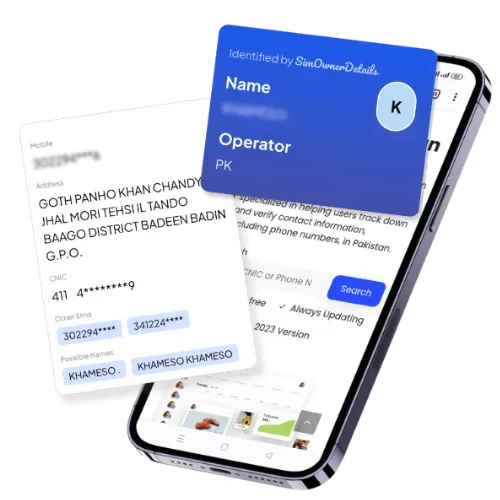
Easy Tools Made Just For You
SIM owner Details helps you quickly verify SIM registration and CNIC information through a secure system in Pakistan with legal access, simple steps, trusted results, and safe privacy protection anytime.
1.
Pak SIM Data
Pak SIM Data provides trusted information about SIM owner Details, registration status, and CNIC verification in Pakistan with simple and secure guidance.

2.
Live Tracker
Live Tracker tips with SIM owner Details, trusted resources, and simple SIM verification guides.
3.
CNIC Information
CNIC Information guides with SIM owner Details, secure verification, and trusted Pakistan resources.
4.
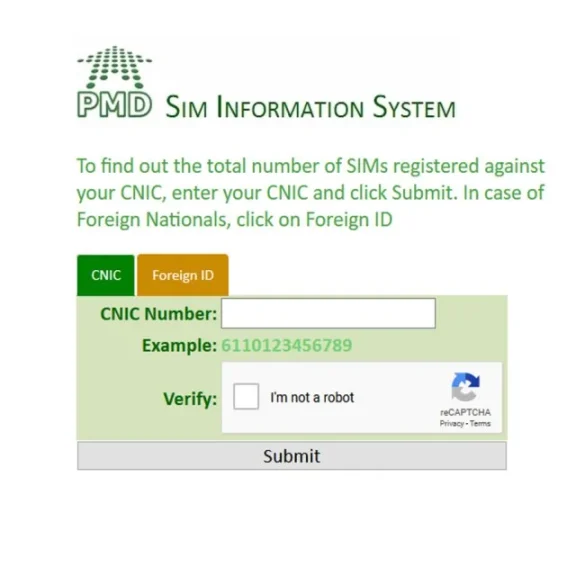
SIM Information
SIM Information guides with SIM owner Details, secure verification, and trusted Pakistan resources.
5.
SIM Database
SIM Database guides with SIM owner Details and trusted Pakistan verification resources.
6.
DLIMS Punjab
DLIMS Punjab guides with SIM owner Details and trusted online verification resources for users.

7.
DLIMS Sindh
DLIMS Sindh guides with SIM owner Details and trusted online verification resources for users.
8.
DLIMS KPK
DLIMS Sindh guides with SIM owner Details and trusted online verification resources for users.
9.
DLIMS Balochistan
DLIMS Balochistan guides with SIM owner Details and trusted online verification resources for users.
10.
DLIMS Islamabad
DLIMS Balochistan guides with SIM owner Details and trusted online verification resources for users.
Easy Electricity Bill Check Tools For You
Easy Electricity Bill Check Tools For You provide a simple and convenient way to check electricity bills online in Pakistan. Use easy tools to view bill information, get quick access, and enjoy a smooth user experience with trusted digital resources and helpful guidance anytime.
1.
FESCO Bill Online
FESCO Bill Online check with easy tools, fast access, and simple bill details for users in Pakistan.

2.
LESCO Bill Online
LESCO Bill Online check with easy tools, fast access, and simple bill details for Pakistan users.

3.
IESCO Bill
IESCO Bill check with easy tools, fast access, and simple electricity bill details for users.

4.
MEPCO Bill
MEPCO Bill check with easy tools, fast access, and simple electricity bill details for users.

5.
GEPCO Bill
GEPCO Bill check with easy tools, fast access, and simple electricity bill details for users.

6.
HESCO Bill
HESCO Bill check with easy tools, fast access, and simple electricity bill details for users.

7.
PESCO Bill
PESCO Bill check with easy tools, fast access, and simple electricity bill details for users.

8.
TESCO Bill
TESCO Bill check with easy tools, fast access, and simple electricity bill details for users.

Check SIM Details Registered on Your CNIC — The Complete Official PTA Guide (2026)
Last updated: 24 July 2026
Introduction
If you searched for “SIM owner details”, there’s a very good chance you’re trying to do one of a few specific things: find out exactly how many SIM cards are currently registered under your own CNIC, confirm whether a number you’re about to trust actually belongs to the person it claims to, or check whether someone has misused your identity card to activate a connection you never authorized. These are all real, common, and completely legitimate concerns for mobile users across Pakistan.
The good news is that every one of these problems already has an official, government-backed, free solution — provided directly by the Pakistan Telecommunication Authority (PTA) in coordination with NADRA and the licensed mobile operators (Jazz, Zong, Telenor, Ufone, and SCO). You do not need any third-party app, paid service, or “instant lookup” website to get accurate answers. This guide walks through every verified method available in 2026, explains exactly how each one works, what results to expect, what to do if something looks wrong, and — importantly — where the legal line sits so you never accidentally put yourself at risk while trying to protect yourself.
By the end of this guide you’ll know how to run a full SIM audit on your own CNIC in under two minutes, how to interpret the results, how to remove a SIM you don’t recognize, and how ongoing PTA campaigns in 2026 are reshaping SIM ownership rules across the country.
Why “SIM Owner Details” Searches Have Exploded in Pakistan
Search interest around SIM ownership and verification has grown steadily over the past few years, and it isn’t hard to see why. Mobile numbers are no longer just for calls and texts — they are now the backbone of digital identity in Pakistan:
- Mobile banking and wallets. JazzCash, Easypaisa, and bank apps all tie your account security directly to the SIM in your phone. If that SIM isn’t properly registered to you, your financial access can be disrupted or, worse, exploited.
- OTP-based verification. Everything from social media logins to government services (NADRA Pak-Identity, tax portals, e-passport applications) sends one-time codes to your registered number.
- SIM reselling and second-hand phones. Buying a used SIM or a phone with a SIM already inserted without checking its registration status can leave you holding a number that isn’t actually assigned to you.
- Identity theft prevention. With CNIC numbers occasionally exposed through data leaks, unauthorized SIM registration using someone else’s ID has become a real fraud vector.
- Business and franchise compliance. SIM retailers themselves need to routinely verify registration status while processing new connections or transfers.
Because of all this, “checking SIM details” has become as routine a digital-hygiene task as checking your bank statement — and PTA has built multiple redundant, free channels specifically so that every citizen can do this themselves, instantly.
The Legal Line You Need to Know Before You Search Further
This is the single most important section of this guide, so read it carefully.
Under the Prevention of Electronic Crimes Act (PECA) 2016 and PTA’s licensing regulations, subscriber data — meaning the name, CNIC, and address tied to a specific mobile number — is legally protected personal information. It can only be accessed by:
- The CNIC holder themselves, through official self-verification channels (which this guide covers in full).
- Licensed telecom operators, for internal compliance and fraud prevention.
- Law enforcement and authorized government agencies, through a documented legal process.
No commercial website, app, or “database” service has lawful authority to let a stranger type in any phone number and instantly receive the registered owner’s name, CNIC, or home address. Any platform claiming to offer this is operating outside PTA’s regulatory framework, and using such services can carry real consequences — both because the operator has no genuine data source (meaning results are often fabricated, outdated, or scraped from leaked data) and because interacting with unauthorized data-collection platforms can itself fall under PECA’s provisions around unlawful access to identity information, with penalties that can include fines and imprisonment for those operating such services.
PTA has been actively enforcing against this category of website. Over the past year, PTA has coordinated the blocking of more than a thousand websites found to be offering unauthorized “SIM database” or “SIM owner lookup” services, citing privacy violations and links to identity theft and fraud complaints. If your goal is genuinely protective — confirming your own record, or checking a SIM currently in your possession — the official channels below give you everything you need, for free, without exposing your own data to an unregulated third party in the process.
Method 1: The 668 SMS Shortcode — Full SIM Audit on Your CNIC
This is PTA’s flagship self-check method and the fastest way to get a complete picture of every SIM registered against your identity card.
Step-by-step:
- Open the default messaging (SMS) app on any phone — a smartphone or a basic keypad phone both work.
- Type your 13-digit CNIC number without dashes or spaces (for example, 3520112345671).
- Send the message to the short code 668.
- Within roughly 30 seconds, you will receive an automated reply.
- The reply lists the total number of active SIMs registered under your CNIC, broken down network by network — Jazz, Zong, Telenor, Ufone, and SCO (used mainly in some regions and by government/defense-linked numbers).
What it costs: A nominal SMS charge applies, typically around Rs. 2 plus applicable tax, deducted from your prepaid balance or added to your postpaid bill — this is a standard telecom SMS charge, not a service fee for the data itself.
Why this method is reliable: Because the request originates from your own registered mobile number tied to your own account, the system can safely return CNIC-linked results without any additional identity verification step — the security check is built into the fact that you’re texting from a number already on file.
Method 2: The 667 MNP Check — Verifying a Single SIM in Your Hand
Where 668 gives you a full audit across all your SIMs, 667 is designed for a narrower, very practical use case: confirming that the specific SIM currently inserted in your phone is registered correctly, and to whom.
When to use this:
- Before you link a second-hand or newly acquired SIM to a bank account or mobile wallet.
- When you want to double-check your own number is still correctly attributed to you after a biometric re-verification cycle.
- When a franchise or retailer asks you to confirm ownership status for a SIM transfer.
Step-by-step:
- From the SIM you want to check (it must be the one physically active in your device), open your SMS app.
- Send the keyword MNP (Mobile Number Portability check) to 667.
- You’ll receive a reply confirming the SIM’s currently registered network and a masked view of the CNIC it’s linked to (for privacy, only partial digits are shown — this is intentional and by design, not a technical limitation).
Important limitation to understand: 667 only ever verifies the SIM physically inserted in your own device at the time you send the message. It cannot be used to look up a number you don’t hold — this is precisely the boundary that prevents it from being used as a people-search tool, and it’s a deliberate privacy safeguard rather than a shortcoming.
Method 3: PTA’s Official Online Portal (cnic.sims.pk)
For users who prefer a browser-based check, or who want a shareable/printable record of their SIM registration status, PTA maintains an official web portal.
Step-by-step:
- Navigate to PTA’s official SIM Information System web portal.
- Enter your own 13-digit CNIC number in the field provided.
- Complete the CAPTCHA or human-verification challenge (this exists specifically to prevent automated scraping or bulk querying — another layer of protection against exactly the kind of misuse this guide warns about).
- Submit the form.
- Review the resulting table, which breaks down every SIM linked to your CNIC by operator, along with activation status.
Why this matters for overseas Pakistanis: Because this is a web-based portal rather than an SMS shortcode tied to a Pakistani number, it’s accessible from anywhere in the world with an internet connection — useful for expatriates who want to confirm their domestic SIM records remain clean while they’re abroad, without needing an active Pakistani SIM to send a text.
Method 4: Operator-Specific “Check My Own Number” Codes
Separate from CNIC-wide SIM audits, each network offers an instant USSD code that simply confirms the mobile number of the SIM currently in your device — handy when you’ve lost track of your own number, especially with a new or infrequently used SIM.
| Operator | USSD Code | Works With Zero Balance? |
|---|---|---|
| Jazz | *99# | Yes |
| Zong | *8# | Yes |
| Telenor | *8888# | Yes |
| Ufone | *780*3# | Yes |
These codes are separate from the CNIC-wide audit — they only confirm the number of the SIM you’re currently using, not a full registration history. Operators do occasionally update these codes, so if one doesn’t respond, the 668 or cnic.sims.pk methods above remain the most dependable fallback.
Understanding the Five-SIM Limit Per CNIC
PTA regulation currently caps the number of active SIMs a single CNIC can hold at five, combined across all networks. This limit exists to curb SIM-box fraud, reduce the pool of unregistered/anonymous numbers available for scams, and keep telecom identity data manageable and auditable.
If your 668 or portal check shows you’re already at five active connections and you need to activate a new one, you have two options:
- Deregister or block an existing SIM you no longer use, through your operator’s franchise or helpline, freeing up a slot.
- Transfer an old number via MNP to consolidate your usage onto fewer physical SIMs if you’re juggling multiple networks unnecessarily.
Retailers are required by PTA regulation to check this limit automatically before activating any new connection, so attempting to register a sixth SIM without freeing up a slot will simply be rejected at the point of sale.
What To Do If You Find a SIM You Don’t Recognize
This is the scenario most people searching for SIM ownership information are actually worried about. If your CNIC check via 668 or the online portal reveals a number you never registered, here is the correct sequence of action:
Step 1 — Document it. Note down the exact number, the network it belongs to, and the date/time of your check. Screenshot the SMS reply or portal result if possible.
Step 2 — Contact the relevant operator immediately. Every major network has a dedicated helpline and franchise network for reporting unauthorized SIMs:
- Jazz: dial 111 from any Jazz number, or visit a Jazz franchise with your original CNIC.
- Zong: dial 310 from any Zong number.
- Telenor: dial 345.
- Ufone: dial 333.
Report the number as unauthorized and request immediate blocking or deregistration.
Step 3 — Ask for written confirmation. When you visit a franchise in person, request a written or SMS confirmation that the SIM has been blocked — this protects you if any dispute arises later about activity on that number.
Step 4 — Escalate to PTA if unresolved. If your operator doesn’t act within a reasonable timeframe, PTA accepts consumer complaints through its official Consumer Complaint Management System, where you can file a formal complaint referencing your CNIC and the unauthorized number.
Step 5 — Re-check after a few days. Run the 668 or portal check again about a week later to confirm the unauthorized SIM no longer appears on your record.
Why speed matters here: an unauthorized SIM registered in your name isn’t just an inconvenience — it can be actively used for OTP interception, mobile-wallet fraud, or other illegal activity that, on paper, traces directly back to your CNIC. The sooner it’s blocked, the smaller the window for misuse.
Biometric Re-Verification: What It Means When You’re Asked
Since PTA mandated biometric verification for all SIM registrations, every active connection must be tied to a fingerprint match completed at the point of sale, cross-checked against NADRA’s database. Periodically, PTA and operators run re-verification campaigns, during which subscribers may be asked to revisit a franchise to reconfirm their biometric match.
This is a routine integrity measure, not necessarily a sign that anything is wrong with your specific SIM — but connections that aren’t re-verified within the notified window can be automatically suspended as a precaution. If you receive an SMS notification about re-verification, it’s worth acting on promptly, both to avoid service interruption and because it’s part of the same system that protects you from unauthorized SIMs being registered against your own identity in the first place.
2026 Update: What’s Changed This Year
PTA and NADRA have continued tightening SIM identity controls through 2026. Recent developments worth knowing about include an expanded joint NADRA–PTA data-matching campaign aimed at flagging SIMs where registration details don’t fully align with current CNIC records, continued enforcement action against unauthorized third-party “SIM lookup” websites, and refinements to the SIM disownment policy that governs how quickly a deregistered SIM number can be recycled and reissued to a new subscriber. If you haven’t checked your CNIC’s SIM record in the last few months, given these ongoing updates, now is a good time to run a fresh audit using Method 1 or Method 3 above.
Comparing the Four Official Methods at a Glance
| Method | Best For | Cost | Internet Required |
|---|---|---|---|
| 668 SMS | Full CNIC-wide audit | ~Rs. 2 + tax | No |
| 667 MNP | Single SIM in hand | Standard SMS rate | No |
| cnic.sims.pk portal | Detailed browser view, overseas access | Free | Yes |
| Operator USSD codes | Quickly confirm your own number | Free (zero balance OK) | No |
Ongoing Security Habits Worth Building Around Your SIM Identity
Checking your CNIC’s SIM record once is useful, but treating it as an ongoing habit is what actually keeps you protected over time. A few practices worth building into your routine:
Set a recurring reminder. Every three to four months, run the 668 SMS check or visit cnic.sims.pk. This is roughly the interval at which new unauthorized activity, if it’s going to happen, tends to surface — and catching it early minimizes the window of exposure.
Cross-check after any CNIC renewal or replacement. If you’ve recently renewed your CNIC, reported it lost, or gone through NADRA’s biometric update process, it’s worth running a SIM check shortly afterward. Identity documents are occasionally targeted for fraudulent SIM registration during the window between an old ID being reported lost and a new one being issued.
Never share your CNIC number for “SIM verification” through unofficial channels. If a website, WhatsApp message, or unsolicited caller asks you to submit your CNIC to “verify your SIM ownership” outside of the official 668, 667, or cnic.sims.pk channels described in this guide, treat it as a red flag. Genuine PTA and operator channels never require you to submit your ID through a third-party form to get a result.
Keep a personal record. After each check, save the SMS reply or a screenshot of your portal result with the date. This creates a simple paper trail that’s useful if you ever need to dispute unauthorized activity or demonstrate when you last confirmed your record was clean.
Be cautious with second-hand SIMs. If you’re acquiring a used SIM — common with older numbers that have accumulated call history or social media logins tied to them — always run the 667 check before relying on it for anything sensitive like banking OTPs, and consider having it re-registered to your own CNIC through your operator if you intend to keep it long-term.
Watch for SMS phishing that mimics official shortcodes. Fraudulent messages sometimes imitate the format of genuine 668/667 replies to trick users into clicking malicious links. Genuine PTA and operator replies never ask you to click a link or enter further personal details — they simply return SIM count or status information directly in the text.
Building these habits takes only a few minutes every few months, but it closes off nearly every common way unauthorized SIM registration goes unnoticed for long periods.
Frequently Asked Questions
Can I check someone else’s SIM owner details using my own CNIC?
No. Every official method described here only returns results tied to the CNIC number you personally enter or the SIM physically in your device. None of PTA’s systems allow a third-party lookup of another person’s registration details — that boundary is intentional and enforced at the system level.
Is checking my own SIM details free?
The online portal at cnic.sims.pk is completely free. The 668 SMS method carries only the standard small SMS fee charged by your own operator, not a service charge for the data itself.
How many SIMs am I legally allowed to register on one CNIC?
Up to five active SIMs combined across all networks, under current PTA regulation.
What happens if I ignore an unauthorized SIM registered in my name?
It remains active and usable for calls, texts, and potentially OTP-based account access — leaving you exposed to fraud liability until you have it formally blocked through your operator or PTA.
Is it safe to enter my CNIC number on cnic.sims.pk?
Yes — this is PTA’s own official government domain, the same regulatory authority overseeing every licensed telecom operator in the country. As a general safety habit, always verify you’re on an official government channel before entering identity information on any website.
I received a biometric re-verification notice — is my SIM already blocked?
Not necessarily. It’s typically a precautionary notice asking you to revisit a franchise before a stated deadline; ignoring it is what risks eventual suspension, not the notice itself.
Can a SIM that was previously mine still show up under my CNIC after I stopped using it?
Yes, if it was never formally deregistered. Numbers you’ve stopped using but never had blocked will continue to count toward your five-SIM limit and appear in your 668/portal results until you request removal.
Do these methods work for NICOP holders (overseas Pakistanis)?
Yes — the cnic.sims.pk portal and the SMS-based methods (when using a Pakistani SIM) both support NICOP numbers in the same way they support standard CNICs.
Conclusion
Verifying SIM ownership details is a legitimate, everyday part of protecting your digital identity in Pakistan, and PTA has built a genuinely robust, free, and entirely legal system for exactly this purpose. Between the 668 SMS audit, the 667 single-SIM check, the cnic.sims.pk portal, and each operator’s own quick-check codes, you have four independent, government-verified ways to confirm exactly what’s registered under your name — with zero need to rely on unofficial “SIM owner lookup” websites that operate outside PTA’s legal framework and put both your own data and your legal standing at risk.
Bookmark this guide and make CNIC SIM checks a routine habit — every few months is a reasonable interval — so that any unauthorized registration is caught and blocked quickly, before it can be misused.
Latest Posts

How to Check Jazz Number Details
Quick Answer To check your own Jazz number, dial *99# from your Jazz SIM — your number will appear on screen within seconds, free of charge, even with zero balance.
 SIM OWNER DETAILS